

Los Angeles Wind and Earthquake Damage Lawyers Here for You
After a storm or earthquake, repairs may be urgent even though the insurance coverage is unclear. A Los Angeles owner may be dealing with a torn roof, movement in the foundation or a fallen tree while trying to learn what the policy will pay. Noravian Law Firm can begin the claim and take responsibility for insurer communications. Our wind and earthquake damage lawyers review the relevant contracts and manage the inspection, payment negotiations and any resulting coverage dispute; a denial is not required before you contact us.
To discuss damage to a home, rental building, business or possessions, reach our team at 818-548-8000 for a free consultation.
Wind and Earthquake Exposure in Los Angeles
Building design matters when earthquake shaking damages a property. Los Angeles’s mandatory soft-story retrofit program addresses certain wood-frame buildings built under pre-1978 code standards that have two or more stories and an open ground floor, such as tuck-under parking. Residential buildings with three or fewer units are excluded from that program. Our lawyers review the actual building and available retrofit records when an insurer claims a new crack or structural problem was already present.
Wind creates a different damage pattern. The City’s emergency guidance describes severe-weather risks across its mountains, canyons and basins. A fallen branch, damaged roof covering and rain entering through a new opening can belong to the same event but require different proof. We document the sequence and examine the policy covering each part of the loss.
Common Causes of Wind and Earthquake Damage in Los Angeles
The source of the loss affects both the investigation and the insurance response. Wind or shaking can harm the main building, neighboring structures and possessions through events such as:
- Strong winds lifting roof shingles or tiles from an older Los Angeles home
- Santa Ana winds driving debris into windows or exterior siding
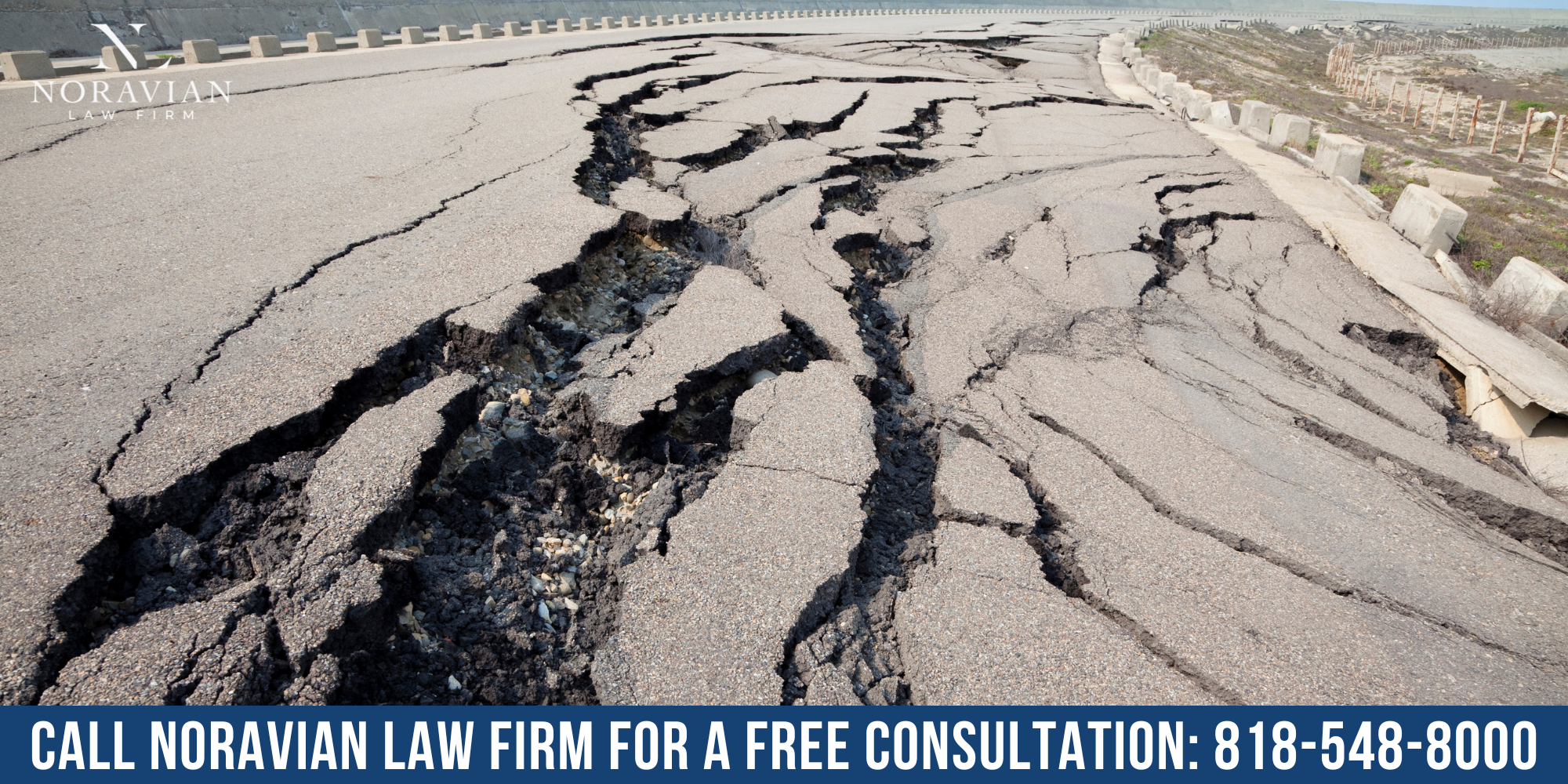
- Ground motion leaving cracks in a foundation, wall or ceiling
- A significant earthquake bringing down part or all of a building
- A tree or utility pole falling onto a residence or vehicle in a neighborhood
- A fire following a seismic rupture of a gas line
- Rain damage inside a building after wind opens the roof
We connect the evidence of how the damage happened with the insurance available for it. That lets us identify covered work and pursue the benefits under your own policy, rather than treating every effect of a storm or earthquake as the same kind of loss.
What to Do After Suffering Wind or Earthquake Damage in Los Angeles
Your first decisions after the event should protect people and permit safe emergency measures. Useful steps include:
- Leave a dangerous area and follow evacuation directions
- Request emergency help for hazards such as a suspected gas leak or energized fallen wire
- Photograph visible damage from a safe location without entering an unstable structure or holding up emergency protection
- Arrange safe temporary measures, such as covering a broken window, to limit additional damage
- Get in touch with our team early so we can report the loss and start the insurance claim
- Retain receipts already received for urgent repairs or substitute accommodation
- Review a proposed insurance settlement with Noravian Law Firm at 818-548-8000 before agreeing to it
The inspection arrangements, policy requests and deadline review become our team’s responsibility. Keep photographs, messages and receipts that are already available; we obtain further records and appropriate professional findings to support the account of the damage.
Challenges in Wind and Earthquake Damage Insurance Claims
The disagreement is often more specific than whether a natural disaster happened. To address a Los Angeles property claim, we identify what the insurer disputes, including:
- Whether wind, flooding or ground shaking produced a particular area of damage
- An exclusion the insurer relies on or a claimed gap between policies
- A rebuilding or repair price that does not reflect the documented work
- An investigation or payment left pending while the residence cannot be occupied
- The selection of a deductible and the figures used to calculate it
We place the coverage language alongside inspection results and detailed repair estimates. Missing work, an unsupported deduction and a disputed cause call for different evidence. Our response addresses those issues individually and explains the covered payment the records support.
Understanding Wind and Earthquake Insurance Coverage
Coverage for the initial event may differ from coverage for damage that follows it. Reviewing all relevant contracts helps clarify these distinctions:
- A standard homeowners contract generally covers wind losses, unless the policy specifically excludes them
- Insurance against earthquake shaking usually must be purchased separately, from a private carrier or through the California Earthquake Authority (CEA)
- A homeowners policy may cover fire caused by an earthquake despite excluding the shaking itself; other resulting losses need their own coverage analysis
This distinction between shaking and a following fire is addressed in the California Department of Insurance earthquake guide. Where different policies cover different damage, our lawyers initiate the appropriate claims and coordinate the insurer communications. The aim is to identify each available benefit without assuming that one contract answers every issue.
Types of Property Damage Claims We Handle in Los Angeles
Our Los Angeles practice addresses the various parts of an insured wind or earthquake loss, including:
- A roof partly or entirely damaged by wind or an object striking it
- Damage to a foundation or a structural collapse after seismic movement
- Wall separation and foundation cracking that follow ground shaking
- Loss to commercial premises and income when the business policy insures it
- Destroyed or damaged household contents, from furniture and electronics to valuables
- Connected losses caused by fire or water after a natural disaster
- Impact damage from a fallen tree, sign, utility pole or nearby structure
The insured interests in a rented apartment are not necessarily the same as those in an owner-occupied home or commercial property. We identify the relevant building and contents coverage, then address temporary housing or business-income benefits separately. Each part of the request is supported according to the policy that applies.
How Noravian Law Firm Builds Strong Damage Claims
A disputed loss needs an explanation of both why payment is covered and how the amount is supported. Our work developing that presentation includes:
- Investigating the event and the extent of the resulting damage independently
- Obtaining appropriate assistance from engineers, contractors and damage specialists
- Assembling a supported submission that explains the claim’s components
- Addressing the adjuster’s position with inspection findings, detailed costs and the policy terms
- Assessing and pursuing litigation when needed to obtain covered benefits
We manage the correspondence, submit the claim documents and arrange professional inspections. Any statement required by the policy is addressed with preparation and guidance from our lawyers. Restoration can expose damage absent from the first estimate; when it does, we develop a documented supplement and handle the further insurer requests.
Liability Beyond Insurance
The weather or earthquake may not be the only cause of the loss. A separate liability claim can arise where another party’s negligent conduct contributes, for example:
- A builder using inadequate materials that fail when the ground shakes
- An owner leaving a tree or unstable structure neglected before it falls onto a neighboring Los Angeles property
- A utility failing to maintain equipment that causes a secondary fire or other damage during high winds
We evaluate that possible responsibility separately from the benefits owed by your own insurer. For the policy claim, cause findings and maintenance records help us address the insurer’s account of the event. We also review a proposed release for its effect on your coverage and the insurer’s right to recover from another party. Our firm still gives prompt notice under your policy even when someone else may be responsible.
Time Limits for Filing Damage Claims
Notice starts the insurance process, while a lawsuit is subject to a separate deadline. Our firm reviews the contract and reports the loss promptly. Under coverage governed by California Insurance Code section 2071, the period to sue is generally one year from the loss, or two years for a qualifying declared-emergency loss. A separate earthquake policy or other coverage can impose different requirements. We use the actual policy and claim history to determine the applicable date and any pauses or extensions.
Proof-of-loss documents have separate requirements. Insurance Code section 2051.5 addresses the time available to collect replacement-cost benefits, including qualifying disaster extensions. Preparing that paperwork and requesting applicable extensions are our responsibility. Extra time to repair or replace the property does not necessarily provide extra time for a lawsuit. Reach us at 818-548-8000 early so the deadline assessment can proceed with the claim.
Frequently Asked Questions
Our firm can report the loss and open the claim before an inspection is complete, so seek legal help promptly. Where Insurance Code section 2071 governs the coverage, you generally have one year from the loss to sue the insurer, or two years for a qualifying declared-emergency loss. That lawsuit period is distinct from the requirements for notice, proof of loss and replacement-cost benefits. Separate earthquake coverage can carry different conditions and deadlines, which we review as part of the claim.
Shaking damage is generally outside homeowners coverage unless earthquake protection was added or separately purchased. That does not necessarily resolve the entire loss: homeowners insurance may cover a fire that follows an earthquake. We identify how each part of the property was damaged and review the insurance in force at the time. Coverage cannot be purchased after the event to cover that past loss. Whether another party is legally responsible is a different question from whether the policies pay.
Potential additional living benefits depend on covered damage preventing use of the home, as well as the contract’s terms and limits. We document the extra costs incurred during repairs and seek the benefits available. Under CEA coverage, loss-of-use benefits have no deductible when that coverage is included or purchased. Existing receipts can help establish the expense; preparing the supporting request and dealing with the insurer are handled by our team.
Some earthquake policies calculate the deductible as a percentage of an insured limit, rather than setting a flat amount. As an illustration only, applying a 15% dwelling deductible to a $500,000 dwelling limit results in $75,000. CEA’s coverage and deductible information describes its percentage choices and separate benefits. We check the calculation against your actual contract and determine which rules apply to each coverage; a single deductible should not be assumed to govern the entire loss.
Older Los Angeles Buildings and Damage After a Storm or Quake
A damaged apartment building in Hollywood and a hillside home near Mount Washington may need different assessments after the same earthquake. A structural engineer can examine the frame, foundation and connections, while relevant records help establish what existed before the event. We connect those findings to the insured loss instead of assuming every crack is new or accepting an unsupported claim that all damage is old.
For properties within the City’s soft-story program, an order to retrofit and a completed retrofit are different records. We obtain available permits and completion information through LADBS property records where relevant. The presence or absence of a retrofit record does not by itself answer whether the policy covers the damage; it helps focus the professional investigation and repair estimate.
After strong winds, a roof opening in the San Fernando Valley, debris impact at a hillside property or broken glazing at a commercial building can leave both immediate damage and later rain intrusion. We document the affected materials, event sequence and emergency protection, then distinguish covered work from unrelated deterioration. If repairs expose additional covered damage, our team prepares a supplement and handles the insurer’s further inspection requests.
We coordinate connected fire damage and water damage within the broader Los Angeles property damage claim. When homeowners and separate earthquake policies may apply to different parts of a loss, our lawyers handle the communications between those claims.
Nearby Areas We Also Serve
Representation for wind and earthquake losses is available in Burbank, Glendale, Pasadena, East Los Angeles and Downey, as well as throughout Los Angeles.
Our San Fernando Valley service areas include North Hollywood, Sherman Oaks, Encino, Van Nuys and Northridge.
Don’t see your city? 818-548-8000 is the number to call to discuss whether we can help with your loss elsewhere in California.
Contact Our Los Angeles Wind and Earthquake Damage Lawyers Today
An unresolved coverage question should not leave you handling an insurer alone after damage to your Los Angeles property. Noravian Law Firm can report the loss, develop the repair and expense evidence and pursue available payment. Our lawyers address denial reasons, omitted damage and disputed deductions using the policy and the documented facts.
Reach our team at 818-548-8000 to arrange a free consultation about your wind or earthquake loss. Accepted cases are handled on a contingency-fee basis: attorney fees are owed only if we recover compensation. Case costs are separate, and the written agreement explains how both fees and costs are handled.
Nuestro personal habla español y puede ayudarle con sus preguntas. Consulte nuestra página de abogados de daños por viento y terremoto en Los Ángeles.